Fulbert Youlou
First president of the Republic of the Congo, former priest.

via Wikipedia: Fulbert Youlou · see source
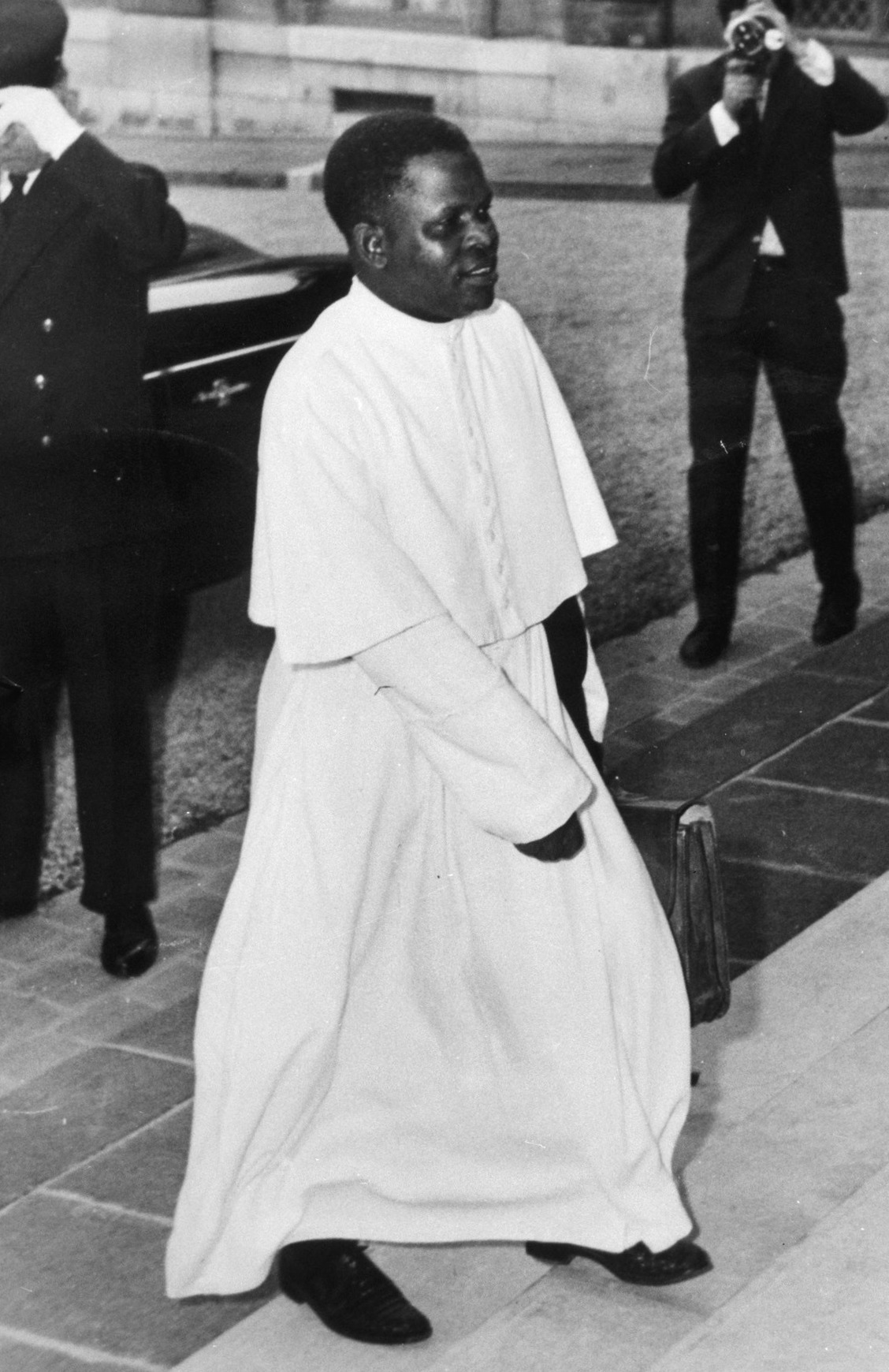
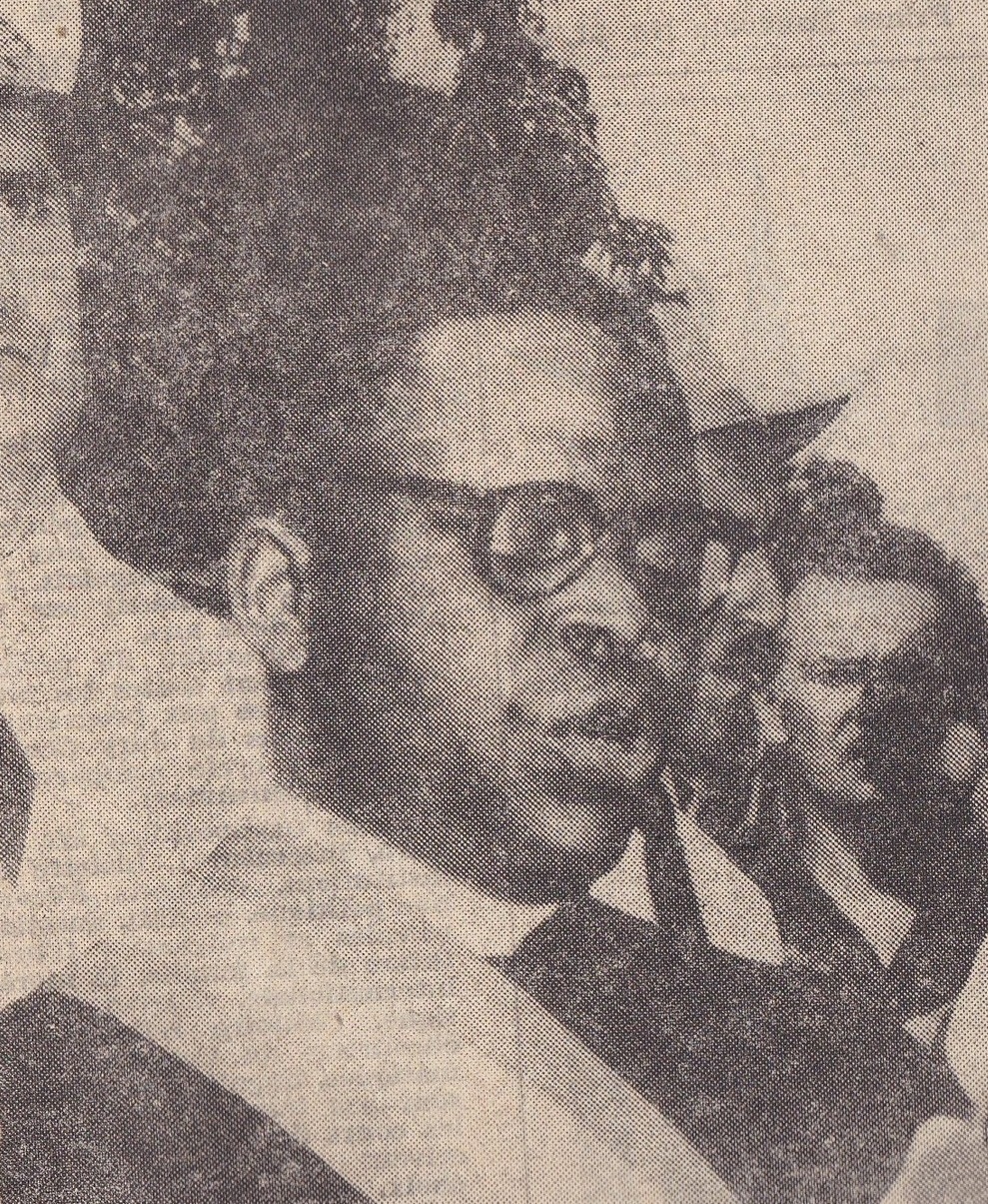
Fulbert Youlou (19 July 1917 – 6 May 1972) was a Congolese nationalist leader and former Catholic priest who became the first President of the Republic of the Congo upon its independence in 1960. In August 1960, Youlou led his country into independence. In December 1960, he organised an intercontinental conference in Brazzaville, wherein he praised the advantages of economic liberalism and condemned communism. Youlou disappointed many when he imposed a single-party system and imprisoned union leaders in August 1963; this led to the revolution of the Trois Glorieuses (English: "Three Glorious Days"). Charles de Gaulle despised Youlou and France refused to assist him. Youlou resigned thereafter in the face of overwhelming opposition to his governance.
- born
- 19 July 1917 (also reported as 29 June or 17 June 1917)
- died
- 6 May 1972
- nationality
- Congolese (Republic of the Congo)
- known_for
- First President of the Republic of the Congo; former Catholic priest; leader of
Verified Timeline
Lore & Background
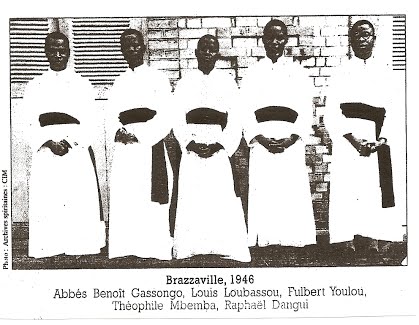
Fulbert Youlou, whose last name means "Grape" in Lari, was born in Madibou. His birth date has been indicated as 29 June, 17 June or 19 July 1917. A younger child in a family of three boys, he was a Lari of the Kongo. At nine years old, he was baptised and received the Christian name Fulbert. In 1929 he entered the Petit Séminaire of Brazzaville. A bright student, he was sent to Akono in Cameroon to complete his secondary studies. After this, he entered the Grand Séminaire of Yaoundé where he did very well in philosophy. Here he met Barthélemy Boganda, the future nationalist leader of Oubangui-Chari and the first prime minister of the Central African Republic autonomous territory, but also Andre-Marie Mbida, Cameroon's first head of state. Returning to the country, he taught at the Seminary in Mbamou before travelling to Libreville to complete his theological studies. He completed his final cycle of studies in Brazzaville. Youlou was ordained as a priest on 9 June 1946 or in 1949. He was assigned to the parish of Saint-François de Brazzaville where he directed several youth organisations, sporting activities, and Catholic groups. He also covered the general hospital and the prison. In October 1953 a complaint was made to the diocese against the young Abbé, caught in the act of adultery. As a disciplinary measure, he was reassigned on 20 November 1954 to a mission in the forest at Mindouli where he was employed as the headmaster of a Catholic school. During his time at Saint-François, Youlou made an impression as a Lari orator. Many Lari were followers of Matswanism, a messianic movement challenging colonialism which was founded by a Téké [André Matswa or Mutswé], who died in prison in 1942. The young Abbé managed to position himself as an interlocutor for the Matswa, taking control of Amicale, the Lari self-help organization Matswa had founded, allowing him to exercise influence on his disciples. In addition, his focus on the association enabled him to attach himself to the Lari youth. Finally, his punishment by the church confirmed him in his role as their leader because it made him appear the victim of the European-dominated Congoloese church. In October 1955, thanks to this revolutionary image, a Kongo council (not limited to Lari people) chose Youlou as their representative for the upcoming legislative elections. When his candidature was announced, his bishop Mgr. Bernard attempted to dissuade him. He was banned from wearing the cassock and from celebrating the Mass. The Kongos supplied a monthly pension for him and even a car with a driver to meet his needs. Initially, Youlou's supporters considered him the reincarnation of "Jesus-Matswa," an idea encouraged by the fact that he was a priest. He himself became a living symbol of colonial resistance. A story attached him to the Loufoulakari falls, where the great Kongo Boueta Mbongo was decapitated and thrown into the water by the colonisers. He took to bathing there in his cassock, praying and calling upon the powerful ancestors. Allegedly his clothes remained dry even when he was immersed. This mysticism was carried over into the electoral campaign. Acts of violence became the method of political action for the Bacongo militants which he oversaw. Thus on 12 December 1955, tracts by his supporters called for the Matswanists who had not joined Abbé to be "whipped". One of them, Victor Tamba-Tamba, saw his house burnt down and his entire family killed on 28 December. The agitation reached fever pitch on 10 October 1956, the day of the election: when the polls of Bacongo were opened, Lari youth took it upon themselves to kill voters whom they suspected of not voting for Youlou. The authorities had to send out security forces to protect the polling stations. Calm did not long return to Brazzaville. In the following two days, a number of houses were destroyed, four thousand people were killed and several thousands were wounded. Youlou and one of his opponents, Jacques Opangault, called for calm by radio. A week later, the results were announced. The incumbent, Jean-Félix Tchicaya was re-elected as deputy for Central Congo with 45,976 votes (29.7% of voters), against 43,193 for Jacques Opangault and 41,084 for Youlou. A collection was taken so that he could travel to Paris to attempt to buy weapons and start a war in the country against the newly elected Tchicaya. This voyage allowed him to make some new contacts.
Reader's Guide
Youlou's significance lies in his role as the first head of state of an independent Congo-Brazzaville, but his legacy is deeply contested. On 17 May 1956, Youlou founded the Union démocratique de défense des intérêts africains (UDDIA), as a competitor to the Congolese Progressive Party (Parti progressiste congolais, PPC) of Tchicaya and of the section of the SFIO transformed in January 1957 into the African Socialist Movement (Mouvement socialiste africain, MSA) directed by Opangault. The symbol of the new party was the crocodile, a ferocious and powerful animal linked to sorcery and crime. An anti-communist party of Liberal Christian persuasion, it contained 46 politicians, 11 of which came from the PPC and 5 from the SFIO. His political base, hitherto limited to the three regions of Pool, Niari and Bouenza, expanded to include Kouliou, with the assistance of the PPC secretary general, Stéphane Tchitchéllé. The party's women's wing, Femmes-Caïmans, was among the most active political organizations in Brazzaville during 1957-1960, managing to recruit illiterate women. In November 1956, Youlou filed papers declaring his candidacy for the election of the mayor of Brazzaville. However, these papers were in fact supposed to be filed in Pointe-Noire. French colonial officials, aware of Barthélemy Boganda's similar dramatic rise to power in Ubangi-Shari, did not want to take the risk of letting Youlou's request lapse, which could have caused unrest amongst the public, so they informed him of his error. They believed that they could utilize Youlou's influence among the Lari people to their benefit. The municipal elections took place on 18 November 1956 for a single combined European and African council and the UDDIA experienced clear success, taking Brazzaville, Pointe-Noire and Dolisie. Youlou defeated Jacques Opangault who contested the results, and was elected mayor of Brazzaville, the first black elected mayor in French Equatorial Africa, with 23 seats compared to SFIO's 11 and PPC's 3. Support for Tchicaya's PPC collapsed almost entirely, leaving Opangault and Youlou as the main political contenders in the 31 March 1957 Moyen-Congo Territorial Assembly elections, held to elect a local government, in accordance with the Loi Cadre Defferre which had entered into force in 1956. Despite their earlier successes, the UDDIA's Vice-President Simon Kikounga N'Got quit the movement and founded his own party, the Groupement pour le progrès économique et social du Moyen-Congo (GPES) Simon Kikounga N'Got took the electorate of Niari with him and won over the PPC-MSA coalition. Thus, on 31 March 1957, the UDDIA came second with 25 seats, while the coalition led by Opangault won 42 seats. Following negotiations, a coalition government was eventually formed by the MSA and UDDIA, with five ministerial portfolios assigned to each party. Opangault received the vice-presidency – French colonial governors remained as presidents until 14 July 1958 when these positions were taken by the elected African vice-presidents. Abbé took the ministry of agriculture, intending to take advantage of the numerous tours of the country which the position would require. During the territorial elections of March 1957, the leading colonists in the country united in the Union du Moyen-Congo (UMC) had effectively supported Youlou. In September 1957 they helped him to poach a representative of Niari, Georges Yambot, from the ranks of the GPES. The UDDIA thus achieved a majority in the Assembly, with 23 seats, which drove Opangault to the point of starting to kill all Lari he could catch in Poto-Poto. Youlou was appointed to the Vice-Presidency. The MSA expressed its outrage and threatened a general war in the country if he didn't get the dismissal of Yambot. The crisis reached its height when Yambot was abducted on 24 November 1957 in order to force him to resign from his seat in the Assembly. The Governor, Jean Soupault, managed to broach a compromise: Opangault was restored to the Vice-Presidency and the UDDIA retained its new majority in the Assembly.
Did You Know?
- Youlou's last name means 'Grape' in Lari.
- He was a Lari of the Kongo, baptized at age nine with the Christian name Fulbert.
- In October 1953, a complaint was made against him for adultery, leading to his reassignment to a mission school at Mindouli.
- His supporters initially considered him the reincarnation of 'Jesus-Matswa,' and a story claimed his cassock stayed dry when he bathed in the Loufoulakari falls.
- The symbol of his UDDIA party was a crocodile, linked to sorcery and crime.
Gallery
Frequently Asked Questions
Who is Fulbert Youlou?
Fulbert Youlou was a Congolese political figure who served as the very first President of the Republic of the Congo after it gained independence in 1960. Before entering politics, he had served as a Catholic priest, and he led the UDDIA nationalist party during the independence movement.
What was Fulbert Youlou's role in Congolese independence?
As the head of the UDDIA party, Youlou was the principal nationalist leader who guided the Republic of the Congo to independence from France in August 1960. He then assumed the presidency, making him the country's first head of state.
How did Fulbert Youlou's presidency end?
Youlou's rule became increasingly authoritarian, which eventually sparked the revolution known as the Trois Glorieuses in August 1963. This uprising forced him from power and ended his time as president.
Why is Fulbert Youlou important in African history?
He holds the distinction of being the first president of an independent Republic of the Congo, marking a pivotal moment in the broader wave of African decolonization in the 1960s. His transition from Catholic clergy to nationalist leader also made him a symbol of the era's political transformations.
What was Fulbert Youlou's background before entering politics?
Born in 1917, Youlou initially pursued a career in the Catholic priesthood before turning to nationalist politics. He went on to lead the UDDIA party, which became the dominant force in the push for Congolese independence.
More in African Leaders 1-18
Spotted an error? Know more?
This is a living reference — every entry is fact-audited, and reader corrections feed straight into our audit queue. Suggest an edit · See this site's audit record